

Access Control and Surveillance as IP Infrastructure
Access Control and Surveillance as IP Infrastructure
Devices and Applications in the corporate environment have become increasingly IP-based. The IP which used to be always there on the backend, at the integration level, is finding a place in front end user application as well. The simplicity and familiarity to configure are the two main reasons which drive the IP adoption.
The recent two new applications, which were traditionally non-IP or non-IT, are access control and surveillance, to be added to IP Infrastructure. Both these applications are beside whatever have already transformed like voice communication (SIP Now), Storages, Wireless access etc. Access control and Surveillance, both these devices used IPs; only in the head-end side where the storage media or controllers are connected to the network infrastructure. Today CCTV cameras and the access controller up to the sensor level, are IP enabled and ready for deployment as part of the IT infrastructure.
These changes have been gradually happening for the last 10 years. Because of the ubiquitous nature of IP in the infrastructure, it is logical for any manufacturer to adopt IP for their applications to be part of the infrastructure. All the Low voltage applications, including the Industrial Automation, will morph or change to IP Infrastructure


DPDP Act Compliance in India: Is Your IT Infrastructure Ready for the 2025 Rules?
BLOG ARTICLE • 16 , OCTOBER 2026 • SUGGESTED READING TIME: 12–15 MINUTES A technical guide to data discovery, data protection, access control, breach detection and implementation readiness India’s Digital Personal Data Protection (DPDP) Act, 2023 and Digital Personal...
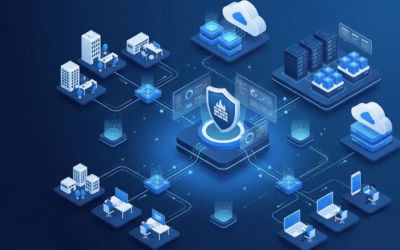
HYBRID MESH FIREWALL
BLOG ARTICLE • 07 OCTOBER 2026 • SUGGESTED READING TIME: 10–12 MINUTES Your perimeter isn’t where it used to be Your applications and your people no longer sit behind one network edge. Workloads run in your own data centre, in Azure and AWS, and in SaaS. Staff connect...

AI Infrastructure Sizing – Part 2
BLOG ARTICLE • 26 SEPTEMBER 2026 • SUGGESTED READING TIME: 12–15 MINUTESInference Infrastructure QuestionnaireInference Infrastructure Sizing Questionnaire A plain-language guide for customers About this guide Inference is the stage where a trained AI model is put to...

AI Infrastructure Sizing – Part 1
BLOG ARTICLE • 24 SEPTEMBER 2026 • SUGGESTED READING TIME: 14–18 MINUTES Training Infrastructure Questionnaire A plain-language guide for customers About this guide Sizing the right infrastructure for AI training depends on many factors beyond the model itself. The...

CrowdStrike Falcon Architecture: Endpoint & Cloud Security
BLOG ARTICLE • 24 SEPTEMBER 2026 • SUGGESTED READING TIME: 11–14 MINUTES Vays Infotech | Technical Blog Cybersecurity platforms are often described using broad labels such as antivirus, EDR, XDR or MDR. CrowdStrike Falcon is better understood as a cloud-delivered...

CrowdStrike Falcon Explained
Cybersecurity platforms are often described using broad labels such as antivirus, EDR, XDR or MDR. CrowdStrike Falcon is better understood as a cloud-delivered security platform that continuously collects telemetry from endpoints, workloads and identities, analyses...
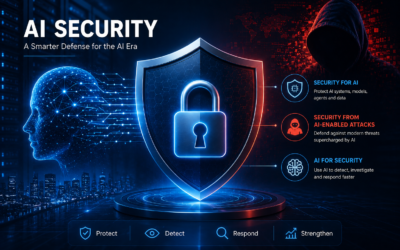
AI Security Is Becoming a New Cybersecurity Category
BLOG ARTICLE • 24 JULY 2026 • SUGGESTED READING TIME: 9–11 MINUTESWhy DLP, EDR, SSE and CNAPP are necessary—but no longer sufficient Executive view: AI now creates three simultaneous security needs: protecting AI systems, defending against AI-enabled attacks, and...
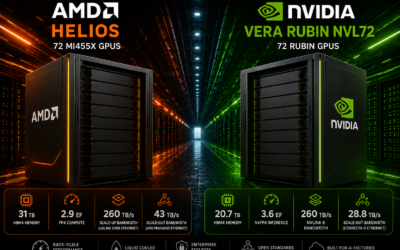
The headline: AMD now has a complete rack-scale AI proposition
BLOG ARTICLE • 24 JULY 2026 • SUGGESTED READING TIME: 9–11 MINUTESAMD’s announcement moves the competitive discussion from “GPU versus GPU” to “AI rack versus AI rack.” Here is what changed, where AMD Helios compares strongly with NVIDIA Vera Rubin NVL72, and what...

IEC 62443 Compliance from the Facility Device Perspective
How the products and devices deployed in manufacturing and defence facilities affect OT cybersecurity and compliance IEC 62443 is not only about policies. It is about how every connected device is selected, configured, segmented, accessed, monitored, maintained and...
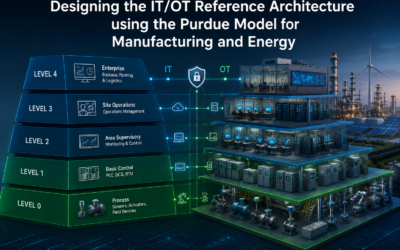
Designing the IT/OT Reference Architecture using Purdue Model for Manufacturing and Energy
Most industrial networks were not designed; they accreted. A switch added for a new line, a router dropped in for the warehouse, a remote site bolted on with whatever connectivity was available that month. The result works until it has to be secured, audited, or...
